
 Image 1 of 5
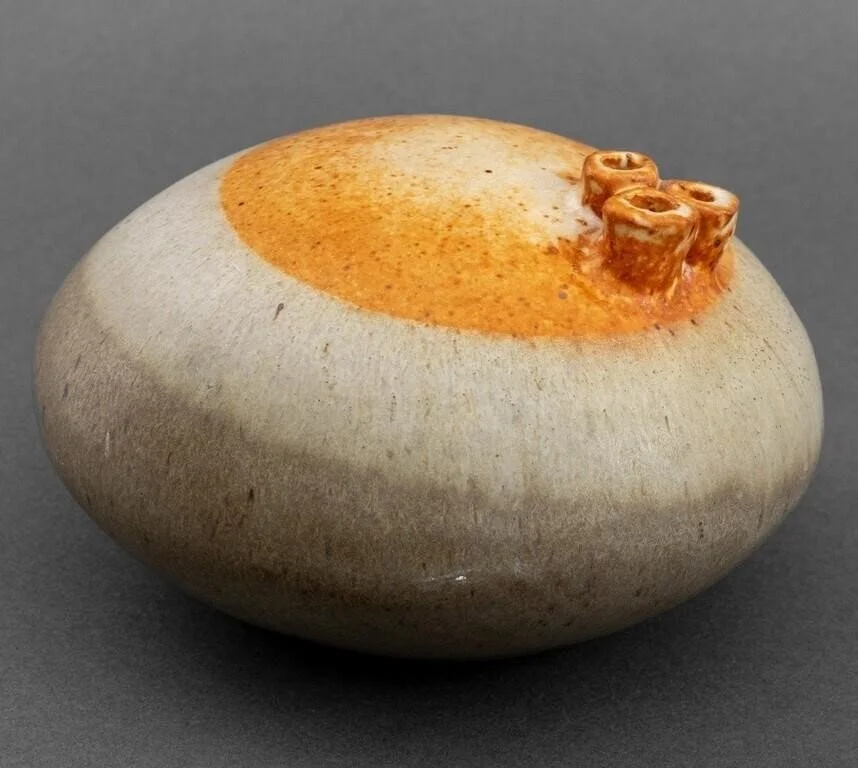 Image 2 of 5
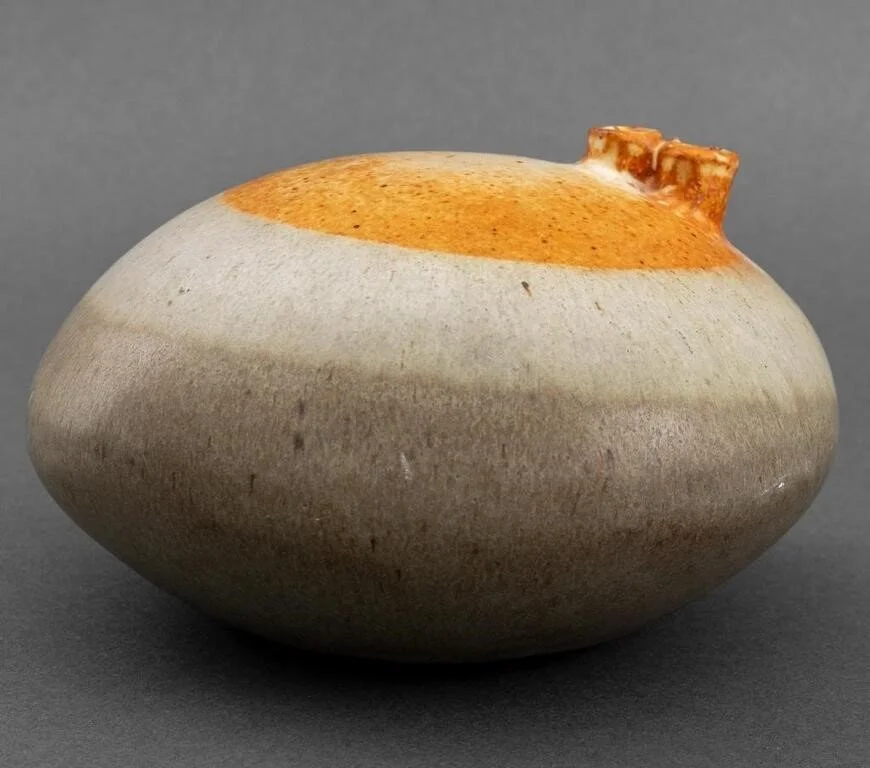 Image 3 of 5
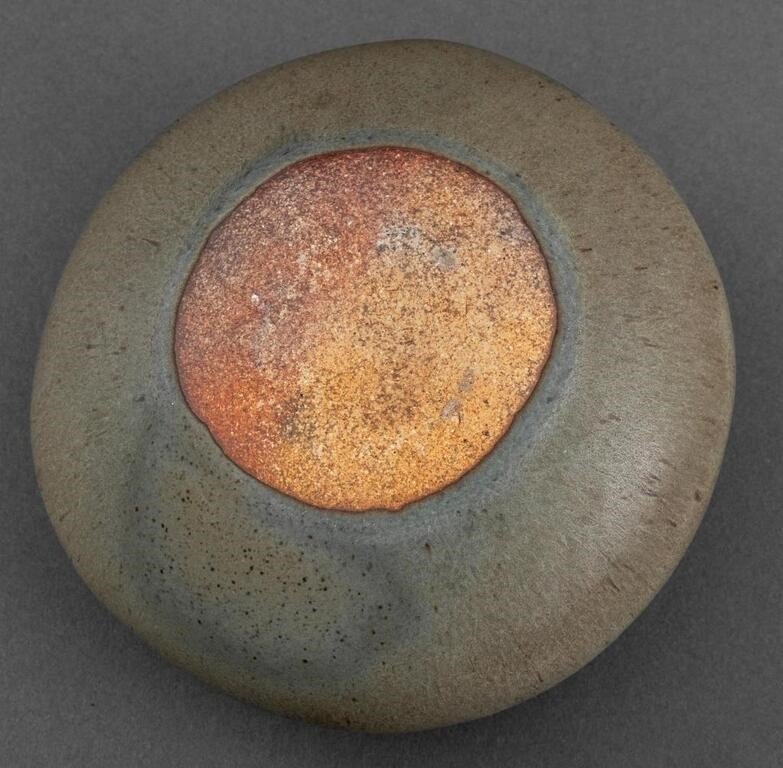 Image 4 of 5
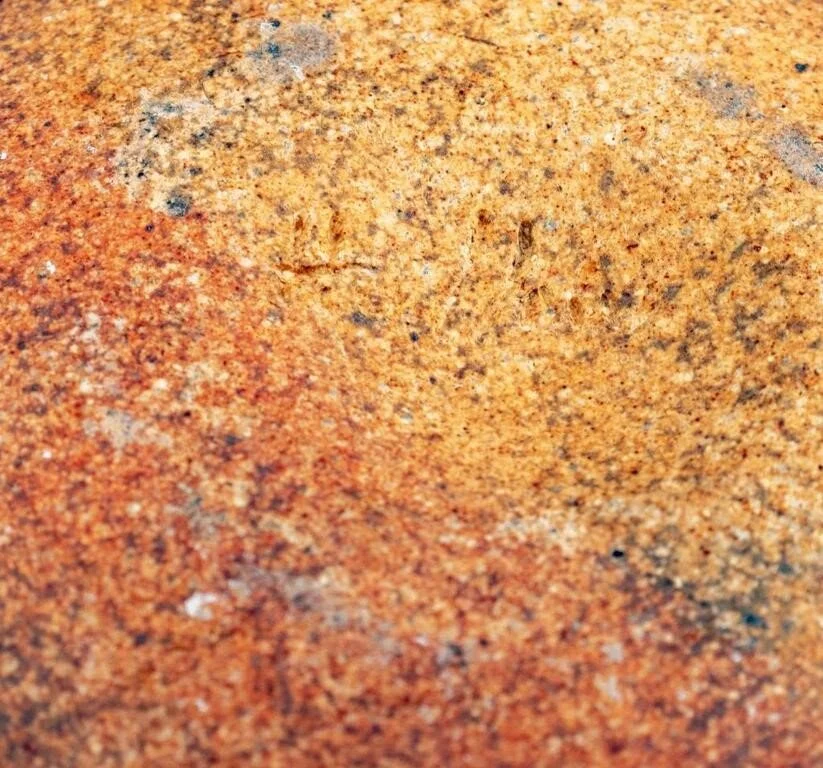 Image 5 of 5
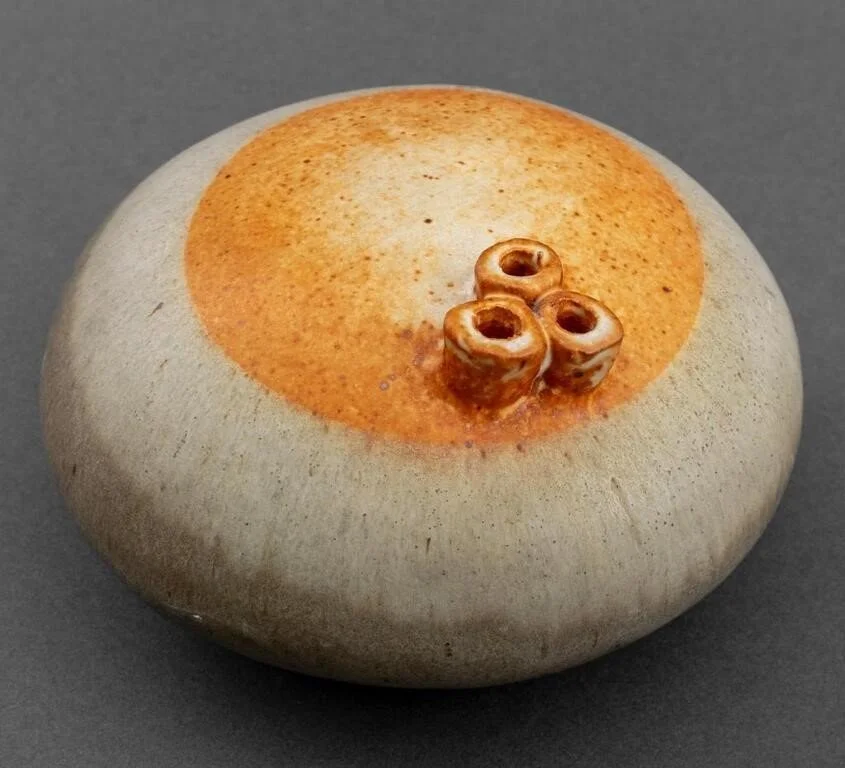
A refined polychrome glazed stoneware weed pot by Warren Hullow (American, 1939–2006), signed to the underside. The vessel presents a softly rounded, low-profile form with a restrained palette of ash gray, warm ochre, and earthy iron tones. A trio of tubular apertures crowns the top, lending both sculptural rhythm and functional versatility.
Hullow’s sensitive glazing technique reveals subtle variegation and kiln-fired texture, with natural speckling and tonal transitions that emphasize the organic character of the clay body. The underside shows a well-defined foot ring and visible firing marks consistent with studio pottery practices of the period.
Dimensions: 3.5" H x 6" Diameter
Medium: Glazed Stoneware
Signature: Signed to underside
Provenance: From a New York City Collection
Warren Hullow’s work occupies a compelling intersection between functional ceramics and sculptural studio pottery. His vessels are celebrated for their quiet sophistication, masterful glaze chemistry, and emphasis on form over ornamentation, qualities that resonate strongly with collectors of mid-to-late 20th century American studio ceramics.
This weed pot exemplifies Hullow’s aesthetic restraint and technical control, making it an ideal acquisition for collectors seeking:
Authentic signed studio pottery
Works by under-recognized American ceramic artists
Objects that function equally as art and design
As interest in postwar American ceramics continues to strengthen, signed works by Hullow remain increasingly scarce, particularly examples with intact glaze surfaces and strong provenance.
The market for American studio pottery has shown steady appreciation, especially for artists whose works remain accessible yet historically grounded. Hullow’s signed vessels offer entry-level investment potential with meaningful upside as scholarship and collector demand continue to grow. Small-format sculptural forms such as this weed pot are especially desirable due to their versatility and display appeal.
A refined polychrome glazed stoneware weed pot by Warren Hullow (American, 1939–2006), signed to the underside. The vessel presents a softly rounded, low-profile form with a restrained palette of ash gray, warm ochre, and earthy iron tones. A trio of tubular apertures crowns the top, lending both sculptural rhythm and functional versatility.
Hullow’s sensitive glazing technique reveals subtle variegation and kiln-fired texture, with natural speckling and tonal transitions that emphasize the organic character of the clay body. The underside shows a well-defined foot ring and visible firing marks consistent with studio pottery practices of the period.
Dimensions: 3.5" H x 6" Diameter
Medium: Glazed Stoneware
Signature: Signed to underside
Provenance: From a New York City Collection
Warren Hullow’s work occupies a compelling intersection between functional ceramics and sculptural studio pottery. His vessels are celebrated for their quiet sophistication, masterful glaze chemistry, and emphasis on form over ornamentation, qualities that resonate strongly with collectors of mid-to-late 20th century American studio ceramics.
This weed pot exemplifies Hullow’s aesthetic restraint and technical control, making it an ideal acquisition for collectors seeking:
Authentic signed studio pottery
Works by under-recognized American ceramic artists
Objects that function equally as art and design
As interest in postwar American ceramics continues to strengthen, signed works by Hullow remain increasingly scarce, particularly examples with intact glaze surfaces and strong provenance.
The market for American studio pottery has shown steady appreciation, especially for artists whose works remain accessible yet historically grounded. Hullow’s signed vessels offer entry-level investment potential with meaningful upside as scholarship and collector demand continue to grow. Small-format sculptural forms such as this weed pot are especially desirable due to their versatility and display appeal.