
 Image 1 of 5
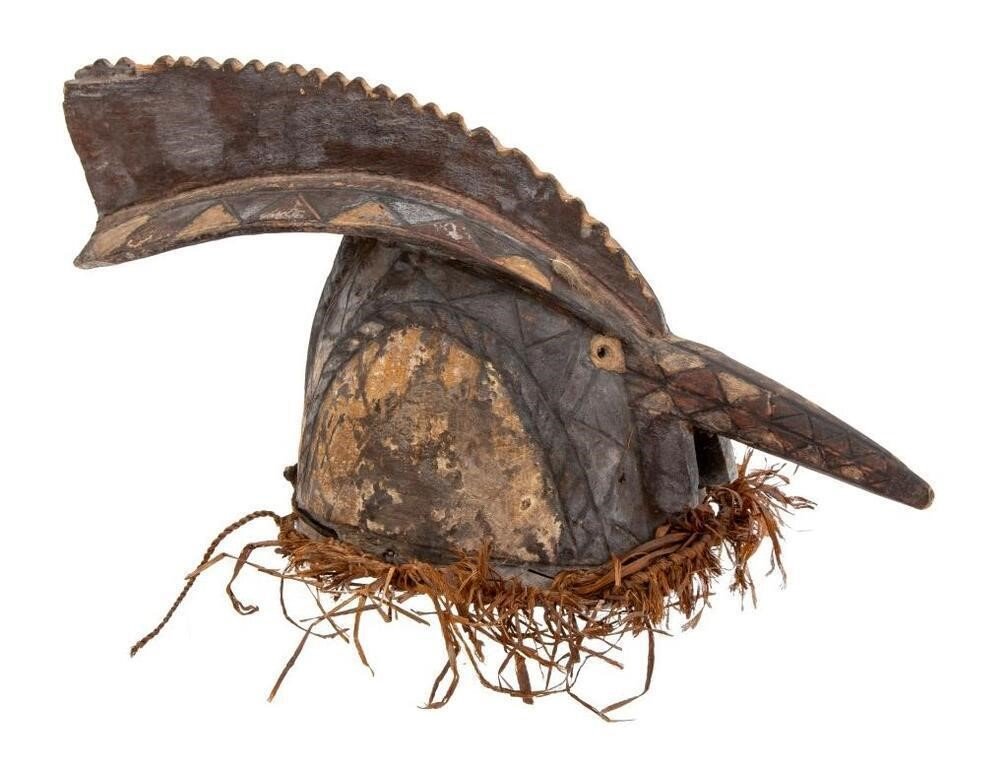 Image 2 of 5
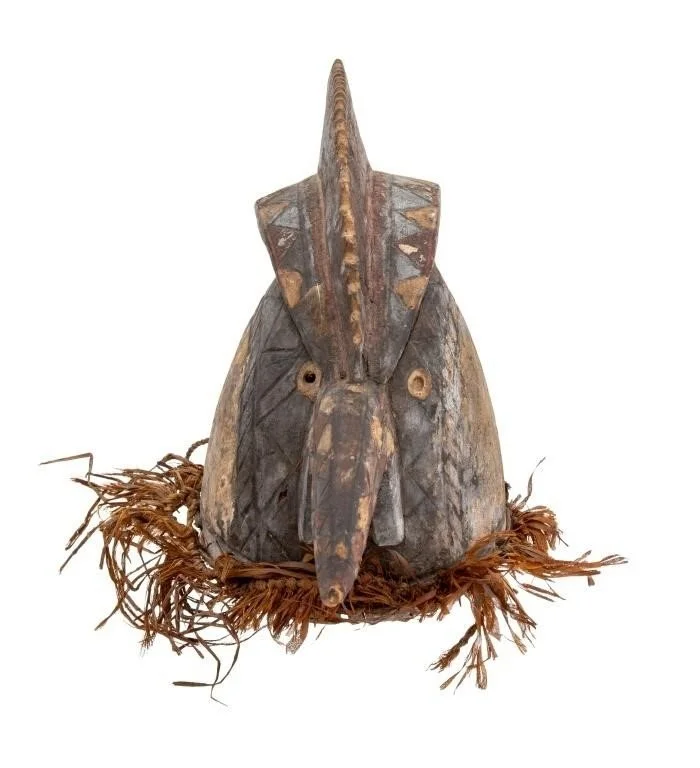 Image 3 of 5
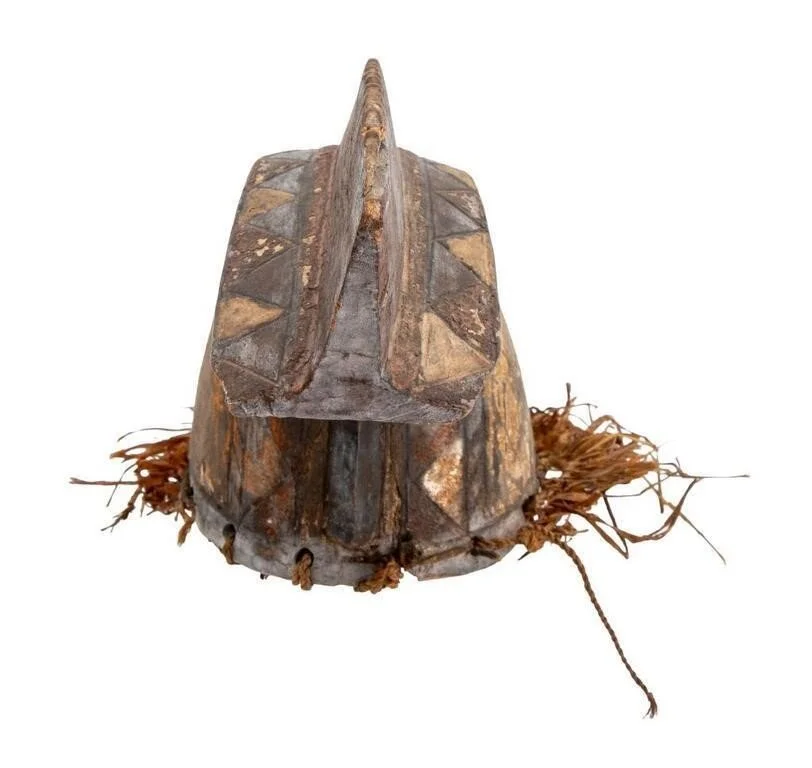 Image 4 of 5
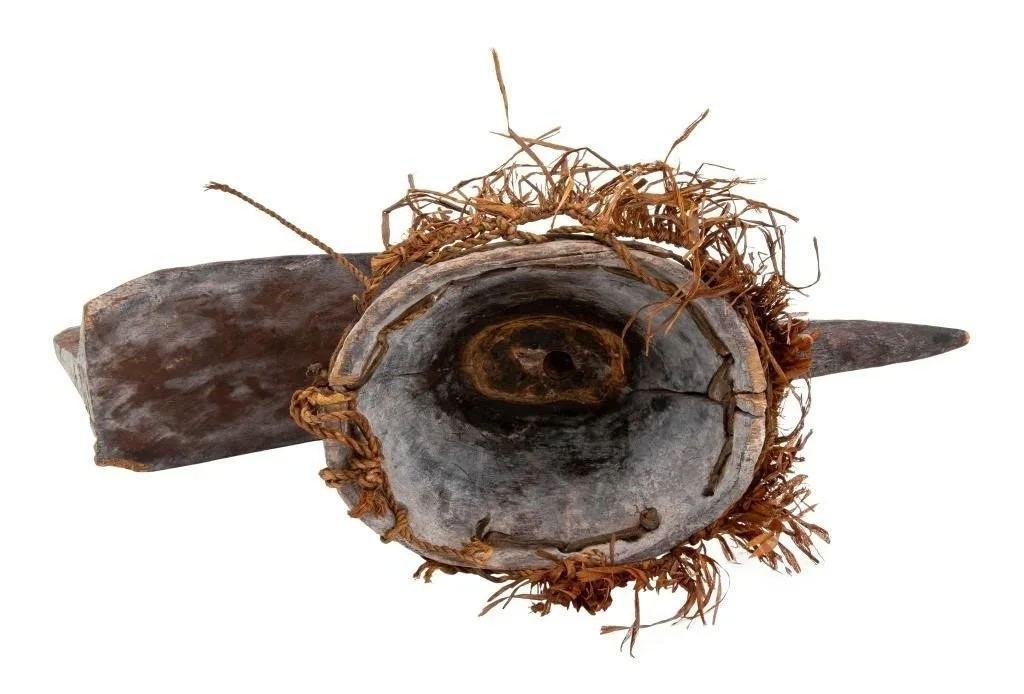 Image 5 of 5
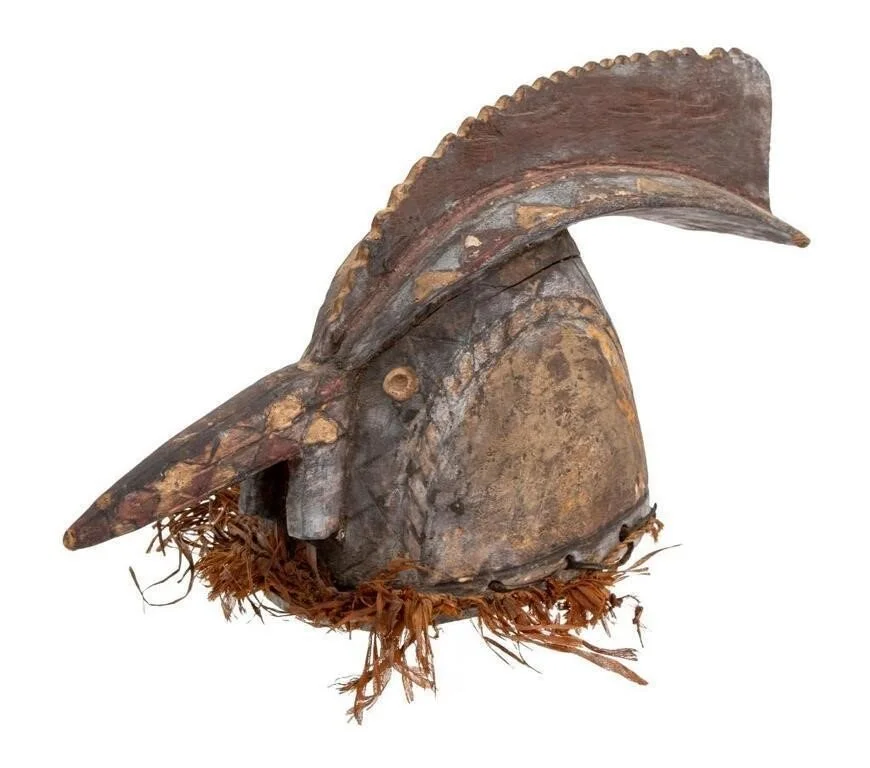
This striking Mossi bird helmet mask exemplifies the bold sculptural language and symbolic abstraction for which Burkina Faso carving is revered. The elongated, forward-thrust beak and dramatic crested crown create a powerful silhouette, while hand-painted geometric motifs animate the surface with rhythmic pattern and age-earned patina.
The mask is carved from a single block of wood and finished with natural pigments, its surface bearing visible signs of ritual use and time—features highly prized by seasoned collectors. A raffia fiber skirt encircles the base, grounding the form and emphasizing its ceremonial function as a helmet mask intended to be worn during performances or rites.
Equally compelling from every angle, this piece reads as both a cultural artifact and a sculptural object, well-suited for wall display or as a focal object in a curated interior.
From the Kew Gardens estate of L. L., a Holocaust survivor and lifelong educator, and wife of K. L., an employee of the United Nations. The mask was likely acquired prior to 1968, the year of K. L.’s death, suggesting mid-20th-century collection during a period of heightened global cultural exchange and institutional travel.
Authentic Mossi helmet masks are increasingly scarce, particularly examples retaining original raffia elements.
The bold avian form reflects themes of vigilance, protection, and spiritual mediation common in Mossi iconography.
Estate provenance with pre-1968 acquisition places this piece firmly outside the era of mass-market export production.
Surface wear, pigment loss, and asymmetry are consistent with age and use and should be regarded as indicators of authenticity rather than flaws.
An excellent acquisition for collectors of African art, ethnographic sculpture, or historically grounded interior design.
This striking Mossi bird helmet mask exemplifies the bold sculptural language and symbolic abstraction for which Burkina Faso carving is revered. The elongated, forward-thrust beak and dramatic crested crown create a powerful silhouette, while hand-painted geometric motifs animate the surface with rhythmic pattern and age-earned patina.
The mask is carved from a single block of wood and finished with natural pigments, its surface bearing visible signs of ritual use and time—features highly prized by seasoned collectors. A raffia fiber skirt encircles the base, grounding the form and emphasizing its ceremonial function as a helmet mask intended to be worn during performances or rites.
Equally compelling from every angle, this piece reads as both a cultural artifact and a sculptural object, well-suited for wall display or as a focal object in a curated interior.
From the Kew Gardens estate of L. L., a Holocaust survivor and lifelong educator, and wife of K. L., an employee of the United Nations. The mask was likely acquired prior to 1968, the year of K. L.’s death, suggesting mid-20th-century collection during a period of heightened global cultural exchange and institutional travel.
Authentic Mossi helmet masks are increasingly scarce, particularly examples retaining original raffia elements.
The bold avian form reflects themes of vigilance, protection, and spiritual mediation common in Mossi iconography.
Estate provenance with pre-1968 acquisition places this piece firmly outside the era of mass-market export production.
Surface wear, pigment loss, and asymmetry are consistent with age and use and should be regarded as indicators of authenticity rather than flaws.
An excellent acquisition for collectors of African art, ethnographic sculpture, or historically grounded interior design.